

Research-backed formula
The Science of Peachy Clean
Two ingredients at scientifically studied doses, chosen for what they actually do in your gut. Here's how Peachy Clean works, and what you can expect once you start.
Fiber has two jobs. Most products only do one.
Add soft bulk
Soluble fiber carries water with it, adding soft bulk that helps stool form and move through on schedule. In controlled trials, resistant maltodextrin increased stool volume and how often people went.2,3
Feed your gut bacteria
That's what “prebiotic” means: fiber that reaches your colon intact and becomes food for your good gut bacteria. They turn it into short-chain fatty acids like butyrate, the main fuel for the cells lining your colon.4,5
Psyllium is the most-studied bulking fiber, and it can work. We just think fiber should do both jobs, and taste good enough that you never skip a day.
Two ingredients. No proprietary blend.
Some gut supplements hide behind a “proprietary blend”: a long list of ingredients with one combined weight, so you can’t tell if any of them are at the dose used in studies. We do the opposite. Two ingredients, each at a studied dose, printed on the label.

Prebiotic fiber
Resistant Maltodextrin
A soluble fiber made from corn that resists digestion in your stomach and small intestine, so it arrives in your colon intact. The FDA recognizes it as a dietary fiber,1 and it's one of the most-studied fibers for regularity: a review of 29 controlled trials found it increased how often people went and how much.2
- Adds soft bulkIncreased stool volume and bowel movement frequency in controlled trials.2,3
- Feeds your gut bacteriaFermented into short-chain fatty acids, shifting the mix toward butyrate.4
- Gentle on your gutFerments slowly, and was well tolerated in studies at doses far higher than ours.4,6,7
- Not a FODMAPBuilt from glucose, not the fructans in inulin, so it isn't one of the fermentable carbs that make up FODMAPs.11
Spore-forming probiotic
Bacillus Coagulans
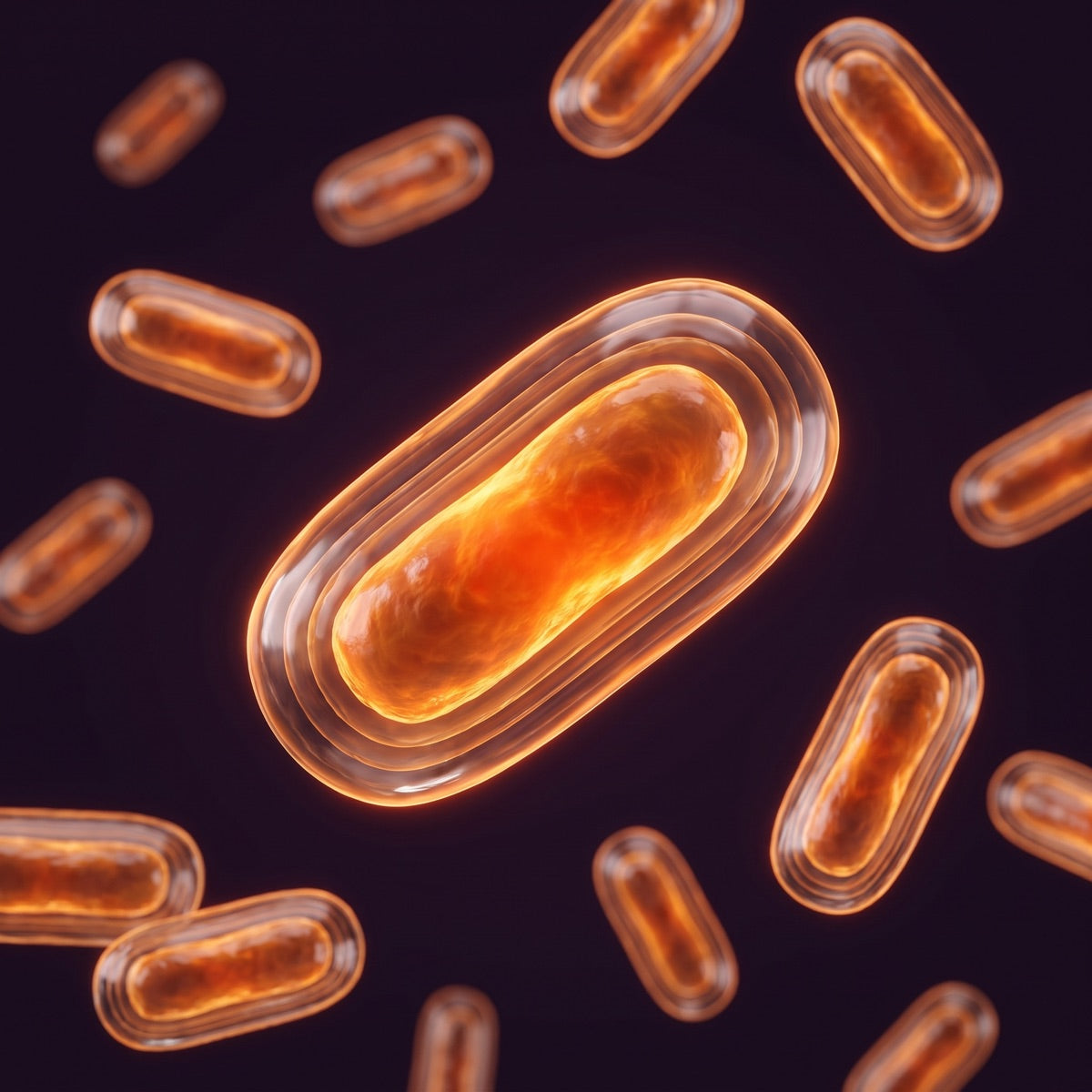
Most probiotics are fragile, and plenty never survive stomach acid, heat or months on a shelf. Bacillus coagulans is different. It lives as a spore, a dormant form wrapped in a tough protective coat, and only wakes up once it reaches your intestine.12,13
- Survives stomach acidIn a lab model of the human gut, about 70% of a B. coagulans strain made it through the stomach and small intestine.12
- Survives being a gummyIn a 2024 study, B. coagulans gummies stayed stable for 24 months, and the spores germinated in every person who ate them.13
- Reduces bloating and gasIn clinical trials, B. coagulans reduced occasional bloating, gas and abdominal discomfort.14,15
- Teams up with the fiberA probiotic plus the fiber that feeds your gut bacteria, in one gummy. Scientists call that pairing a synbiotic.18
Shelf-stable, so no fridge needed.
How 2 gummies help you go number 2
-
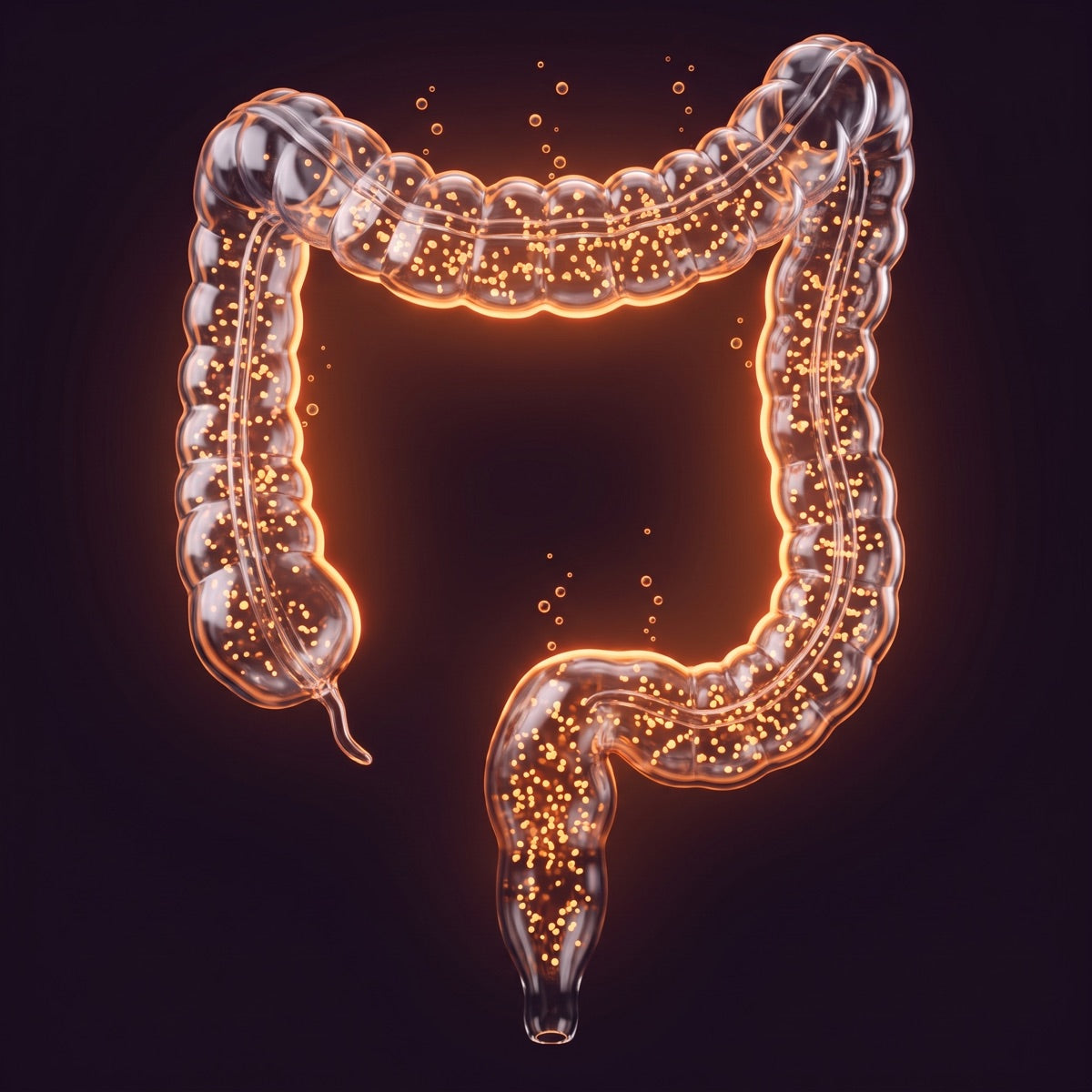
Stomach to colon
It reaches your colon and adds soft bulk
-
The result
Regular, more complete trips
Across the research, resistant maltodextrin supported more regular bowel movements and a better sense of complete emptying.2 That's the whole point.
A probiotic that survives your stomach acid
-
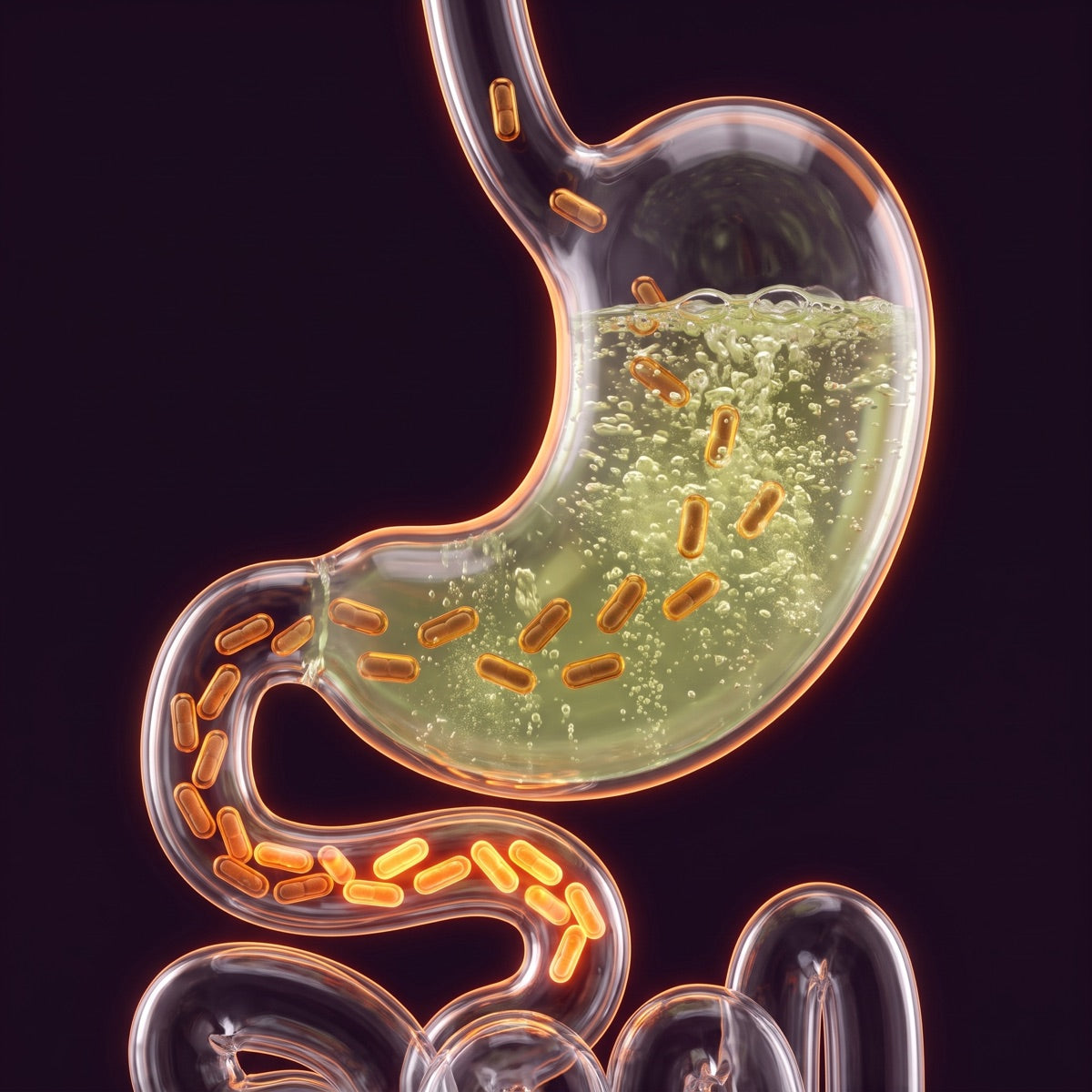
Stomach
A tough spore shell shields it from acid
Stomach acid is where most probiotics take their biggest hit. Bacillus coagulans travels as a spore, wrapped in a protective coat, so it gets through.12
Many probioticsMany common strains are sensitive to stomach acid and bile.B. coagulansAbout 70% survived a lab model of the stomach and small intestine.12 -
Intestine
It comes alive in your intestine
Once safely past your stomach, the spore germinates into active, living bacteria.13
-
Colon
It reduces bloating and gas
In clinical trials, B. coagulans reduced occasional bloating, gas and abdominal discomfort.14,15
Individual results may vary.
Regular in days. Predictable in weeks.
Fiber works best when it's consistent. Take two gummies every day with a glass of water, and give your gut a couple of days to adjust. Every gut is different, so your timeline may be too.
Settling in
The fiber starts reaching your colon and your gut bacteria start getting fed.
You may notice
- Softer, easier bowel movements
- Your gut getting used to a new fiber
Getting regular
With a steady daily dose, things start to fall into a rhythm.
You may notice
- More regular trips to the bathroom
- A cleaner, more complete feeling after you go
- Less time spent cleaning up
Predictable
This is where most customers say it clicks.
You may notice
- Bathroom timing you can plan around
- Feeling lighter and less bloated
- More confidence, less planning around your gut
The new normal
Two gummies a day becomes a habit you barely think about.
You may notice
- A routine that just works
- The freedom to be spontaneous
Individual results may vary.
- Independent clinicians
- Never paid to review
- Verified by FrontrowMD
Got a question about the science?
Ask ClinicianAI, built from FrontrowMD's clinician analysis of Peachy Clean.
The Peachy Clean Difference
Not overhyped or overpriced, just evidence-based gut support built for bottoms by bottoms and backed by independent clinicians.

 Fiber Pills
 Metamucil
A note from our founder
When I started looking properly at fiber supplements, I noticed almost all of them only do half the job. Powders that bulk you up but leave your gut bacteria hungry. Gummies full of cheap inulin that leave you bloated. Probiotics that never make it past your stomach.
So we built Peachy Clean around the science on this page: a prebiotic fiber that does both jobs, gently, and a probiotic tough enough to survive your stomach acid. Two ingredients, each at a studied dose, with nothing hidden in a blend.
And because fiber only works if you take it every day, we put it in a gummy you'll actually look forward to.
Every claim on this page is backed by a published study, linked below. Try it for 60 days. If it doesn't work for you, we'll refund you.

Questions About the Science
How is Peachy Clean different from Metamucil and other fiber supplements?
Most fiber products are built around one job. Psyllium powders add bulk but your gut bacteria barely ferment them. Most fiber gummies use inulin or chicory root, which feeds bacteria but ferments fast and can cause gas. Peachy Clean uses resistant maltodextrin, a fiber that adds bulk and feeds your gut bacteria slowly and gently, plus a spore-forming probiotic. And it's two gummies, not a gritty drink.
What is resistant maltodextrin? Is it the same as maltodextrin?
No. Regular maltodextrin is a starch your body digests like sugar. Resistant maltodextrin is made so your digestive enzymes can't break it down, so it reaches your colon intact and works as a fiber. The FDA recognizes it as a dietary fiber.
Why don't you use inulin?
Inulin (often listed as chicory root fiber) is a fructan, a FODMAP that gut bacteria ferment quickly. That quick fermentation is why many fiber gummies come with gas and bloating, especially for sensitive guts. Resistant maltodextrin ferments more slowly and is very well tolerated.
Is Peachy Clean low FODMAP?
Our fiber, resistant maltodextrin, is built from glucose, so it isn't one of the FODMAP carbs, and we use no inulin or chicory root. The finished gummy hasn't been through FODMAP certification, so if you follow a strict low-FODMAP plan, check with your dietitian.
Why Bacillus coagulans instead of other probiotics?
Because it forms spores. The spore's protective coat helps it survive gummy making, time on the shelf and your stomach acid, then it germinates in your intestine. Many common probiotics are far more fragile. And in clinical trials, B. coagulans reduced occasional bloating, gas and abdominal discomfort.
Is 4g of fiber enough?
Peachy Clean isn't a replacement for fiber from food. Most adults already fall short of the 28g to 34g a day the US Dietary Guidelines recommend for men, and two gummies add a gentle, consistent 4g on top. That 4g sits within the range used in clinical studies of resistant maltodextrin. Start with 2 gummies for the first week and see how you feel.
Will it make me bloated?
Peachy Clean is designed to be gentle from day one. There is no inulin or chicory root, the fast-fermenting fibers behind most fiber gummy bloating. We chose resistant maltodextrin because it ferments slowly and was well tolerated in studies at doses far higher than ours. Take 2 gummies a day with a glass of water.
Do I need to drink a lot of water with it?
We recommend a glass of water with your gummies, like with any fiber. But there's no gritty drink to chug and nothing to mix.
I have a health issue or concern. Should I take this?
If you are concerned and have a health issue, such as IBS, you should consult your physician before starting any new supplement.

Adds bulk. Feeds your gut. Fights the bloat.
- 4,000mg resistant maltodextrin, a prebiotic fiber that adds bulk and feeds your gut bacteria
- 1 billion CFU Bacillus coagulans, a probiotic that survives your stomach acid to reduce bloating
- Zero inulin or chicory root, so no harsh bloating
- Two gummies a day, no gritty powder or horse pills
References (20)
- U.S. Food and Drug Administration. Review of the Scientific Evidence on the Physiological Effects of Certain Non-Digestible Carbohydrates (2018); resistant maltodextrin/dextrin listed as a dietary fiber. FDA
- Watanabe N, et al. Effects of resistant maltodextrin on bowel movements: a systematic review and meta-analysis. Clin Exp Gastroenterol. 2018;11:85-96. PubMed
- Abellán Ruiz MS, et al. Digestion-resistant maltodextrin effects on colonic transit time and stool weight: a randomized controlled clinical study. Eur J Nutr. 2016;55(8):2389-2397. PubMed
- Fastinger ND, et al. A novel resistant maltodextrin alters gastrointestinal tolerance factors, fecal characteristics, and fecal microbiota in healthy adult humans. J Am Coll Nutr. 2008;27(2):356-366. PubMed
- Koh A, et al. From dietary fiber to host physiology: short-chain fatty acids as key bacterial metabolites. Cell. 2016;165(6):1332-1345. PubMed
- Kishimoto Y, et al. Examination of the laxative threshold of resistant maltodextrin in healthy adults. 2013. PubMed
- Yoshida T, et al. In vitro fermentation of resistant dextrin and inulin by human fecal microbiota. Nutrients. 2024. (Laboratory study.) PubMed
- Monash University FODMAP team. Fibre supplements and IBS (inulin described as highly fermentable). Monash University
- Bonnema AL, et al. Gastrointestinal tolerance of chicory inulin products. J Am Diet Assoc. 2010;110(6):865-868. PubMed
- Major G, et al. Colon hypersensitivity to distension, rather than excessive gas production, produces carbohydrate-related symptoms in individuals with irritable bowel syndrome. Gastroenterology. 2017;152(1):124-133. PubMed
- Monash University. About FODMAPs and IBS: FODMAPs are fructans, galacto-oligosaccharides, lactose, excess fructose and polyols. Monash University
- Maathuis A, et al. Survival and metabolic activity of the GanedenBC30 strain of Bacillus coagulans in a dynamic in vitro model of the stomach and small intestine. Benef Microbes. 2010;1(1):31-36. PubMed
- Perotti A, et al. Bacillus coagulans in gummies: stability and spore germination in healthy adults. Curr Res Food Sci. 2024. PubMed
- Majeed M, et al. Bacillus coagulans MTCC 5856 supplementation in the management of diarrhea predominant irritable bowel syndrome: a double blind randomized placebo controlled pilot clinical study. Nutr J. 2016;15:21. PubMed
- Kalman DS, et al. A prospective, randomized, double-blind, placebo-controlled parallel-group dual site trial to evaluate the effects of a Bacillus coagulans-based product on functional intestinal gas symptoms. BMC Gastroenterol. 2009;9:85. PubMed
- McRorie JW, McKeown NM. Understanding the physics of functional fibers in the gastrointestinal tract. J Acad Nutr Diet. 2017; and McRorie JW, et al. Fiber supplementation in clinical practice. 2020. PubMed
- 21 CFR 201.319: required warning and fluid direction for water-soluble gums and hydrophilic gums (including psyllium). eCFR
- Swanson KS, et al. The International Scientific Association for Probiotics and Prebiotics (ISAPP) consensus statement on the definition and scope of synbiotics. Nat Rev Gastroenterol Hepatol. 2020;17(11):687-701. PubMed
- Soret R, et al. Short-chain fatty acids regulate the enteric neurons and control gastrointestinal motility in rats. Gastroenterology. 2010;138(5):1772-1782. PubMed
- Reigstad CS, et al. Gut microbes promote colonic serotonin production through an effect of short-chain fatty acids on enterochromaffin cells. FASEB J. 2015;29(4):1395-1403. PubMed
*These statements have not been evaluated by the Food and Drug Administration. This product is not intended to diagnose, treat, cure, or prevent any disease. Research summaries describe the ingredients studied, often at different doses or strains than in Peachy Clean, and are shared for education. If you have a medical condition, talk to your doctor before starting any supplement.
